

Your nonprofit organization may receive contributions in the form of nonfinancial assets, which are goods and services received at no cost or below market cost, gaap accounting for donated assets or other noncash donations. Common examples of nonfinancial assets include items such as food, clothing, supplies, furniture and equipment as well as professional services or facilities. Generally Accepted Accounting Principles (GAAP) requires that a nonprofit record donated nonfinancial assets on the financial statements. In-kind contributors are typically accountants, architects, carpenters, doctors, electricians, awyers, nurses, plumbers, teachers, and other professionals and tradesmen. For example, an electrician donating his services during a construction project at a cost below market or for no cost. Under GAAP, the service would qualify as an in-kindcontribution as the electrician has a specialized skill that the nonprofit would otherwise have to purchase.
Nonprofit Accounting Academy
For donors, it is often easier to contribute items they no longer use or contribute services when they have extra capacity. With in-kind donations, businesses and individuals are able to donate far more than if they were limited to just donating cash. Under GAAP, all contributions received should be recorded as revenue upon receipt, including in-kind donations.
Determining Fair Value Measurement
You must also report an offsetting expense in the proper category on the Statement of Functional Expenses. Once you have measured the value of in-kind services, you must report them on your financial statements under the Statement of Activities. If you are measuring the services of a skilled professional, benchmark them against comparable professionals at the time the services were rendered. If they provided their services at a discounted rate, simply subtract the discounted rate from the standard rate and report the figure as a donation. Many nonprofits receive at least some non-cash contributions, ranging from advertising time on the local radio station to free use of an event space for a fundraising dinner.
- If an organization utilizes an ERP, it may use the fixed asset module available from the ERP instead of third-party fixed asset software.
- This financial ratio can be helpful internally when budgeting and forecasting.
- Under GAAP, the service would qualify as an in-kindcontribution as the electrician has a specialized skill that the nonprofit would otherwise have to purchase.
- Many nonprofits, including smaller organizations, rely on such contributions.
- GAAP because it does not fit neatly into traditional accounting categories such as cash, financial instruments, or inventory.
Example of an outbound fixed asset donation
When financial reports are clear, donors see their impact, turning one-time givers into loyal supporters. Grantmakers often require GAAP-compliant financial statements to even consider an application, making compliance a gateway to funding. Beyond fundraising, accurate financial data empowers your leadership team to make better strategic decisions. It also underpins your IRS Form 990 requirements, helping maintain your tax-exempt status and ensuring smoother audits. Recognized contributed services should be reported as contribution revenue and as assets or expenses. Nonfinancial assets include food, clothing, pharmaceuticals, supplies, equipment, vehicles, buildings, and gifts to be auctioned off at a special event.
- Common resources for determining this value include online marketplaces, thrift stores, and commercial inventory lists.
- This comprehensive guide delves into the origin, understanding, and accounting implications of donated assets.
- By implementing these tools properly, organizations can efficiently manage and report in-kind donations.
- Effective management of in-kind donations is crucial for nonprofits to ensure that non-cash contributions directly support their programs and services.
- Donated cash is recorded at its face value, though adjustments may be necessary for foreign currencies.
- ABC agreed to identify Bravo as a sponsor of the event on its website and in other communications and to permit Bravo to publicize its participation in its corporate advertising.
Prior to Wisdify, Maryn co-founded (along with Nate) BostonExcel, a Microsoft Excel training company that worked with dozens of companies in virtually every industry. Maryn’s clients included numerous Fortune 1000 companies, prestigious universities, startups and everything in between. AVAILABLE NOW – Great Beginnings for New Nonprofits, a free 8-part email course on fundraising, financial management and other “must know” topics. Use our essential california hr compliance checklist to protect your business from costly fines. While compliance requires diligence, the result is a stable financial foundation that frees you to focus on your mission. Organizations that accept GAAP don’t just survive; they thrive, attracting more support and making a greater difference.
- Nonprofit organizations often receive free or discounted rent on the buildings they occupy.
- Embracing GAAP demonstrates a commitment to accountability and professionalism, proving you’re serious about your mission.
- This software can track donations in detail, generating accessible reports for financial statements and donor acknowledgment.
- There is a common misconception among nonprofits that because in-kind donations are provided at little or no cost, the organization doesn’t have to report them on its financialstatements.
- Management and accounting personnel that oversee financial reporting should set expectations for capitalization policies, determining an asset’s useful life, and the appropriate method of depreciation.
- Depending on your organization, in-kind donations may be a primary portion of your revenue and mission, or they may play a minor role in the totality of your revenue.
- For collection items such as art, real estate, sports collections, or other unique properties, appraisals are required when the value is greater than $5,000.
A key differentiator for nonprofit accounting is that not all money can be treated as one https://mdhostar.com/2024/01/15/what-is-public-accounting-definition-examples-and/ large pool. This is the basis of fund accounting, where GAAP requires classifying net assets based on donor intent. Unlike for-profits, which prioritize profit, nonprofit accounting’s main goal is financial transparency. GAAP provides the framework to clearly show stakeholders how their donations advance your mission. This guide simplifies GAAP for nonprofits, breaking down everything from core principles to practical steps, making compliance achievable.

Nonprofits must provide clear notes in their financial statements to explain the nature and value of donated assets. This includes disclosing the different categories of contributions received, such as cash or noncash gifts. For noncash gifts, often called gifts-in-kind, the NFP must state whether it used the assets for its programs or sold them to raise money. The principal market is that with the highest volume of activity for the donated asset.
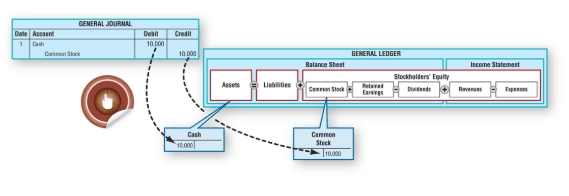
- It then depreciates the asset on books over its useful life (perhaps 5 years straight-line).
- Showing a high percentage of spending on program services proves your focus on mission delivery over overhead.
- Nonprofits treat donated assets as incoming resources to be depreciated like any other asset (though only for book purposes, not tax).
- It may be a sensitive donor issue, but if possible have the donor make a cash gift to the organization that is then used to pay for goods.
- Valuation methods may use cost or selling price, sale of comparable properties, replacement cost and expert’s opinion to arrive at a fair value of goods and properties.
- Donated capital should be recognized and measured according to the US GAAP rules for the definition of assets or liabilities of an organization.
Non-cash contributions also called in-kind contributions are contributions other than cash, checks, money orders and credit card donations. For 990 purposes, non-cash contributions include donation of goods/property and stocks; but NOT volunteer services performed for the reporting organization or donated use of materials, facilities, and equipment. In particular, stakeholders raised concerns about nonprofits applying U.S. wholesale market prices to determine the value of donated pharmaceuticals that can’t be legally sold in the United States. For example, a donor might contribute such items for use only outside the country. If the values are inflated, an Purchases Journal organization’s revenue and program expense would likely increase.


We’ll modernize and manage your accounting systems to save you time, money, and stress. The ‘Allowance for Doubtful Accounts’ is a contra-asset account, meaning it reduces the balance of the ‘Donations Receivable’ account on the Statement of Financial Position. Aplos partners with Stripe Payments Company for money transmission services and account services with funds held at Fifth Third Bank N.A., Member FDIC. He is passionate about learning and development, he loves helping people achieve their professional and personal goals.
Social Advocate—Distinguishing Between Contributions and Exchanges

Items valued over a specific threshold—commonly $5,000—typically require appraisal by a qualified, independent appraiser for tax purposes. This appraisal must be meticulously documented, detailing the method and basis for the valuation, and the qualifications of the appraiser. It is difficult to distinguish donated capital transactions from exchange transactions. The FASB states that the receiver must make a suitable judgment on the recognition of such transactions.